1. Devout Mormons can be found all across the political spectrum.
The Mormon Church doesn’t endorse candidates or political parties, and although most American Mormons are Republicans, a Mormon Democrat has served as the Senate Majority Leader for the last five years. Owing to our history of persecution and emphasis on self-reliance, there is also a noteworthy group of Mormons with libertarian sympathies who do not easily identify with either party.
Mormons can be found on all sides of most issues. On immigration, for example, many Mormons tend to be more liberal than other Republicans (or Democrats, for that matter). Many of us have served missions abroad, and tend not to be too judgmental of people who come here seeking a better life. Although Mormons generally agree on many important moral issues (see below), there is no consensus on economics and the proper role of government. We all agree, for example, that we have an obligation to help the poor. However, the extent to which government should help meet their needs by taxing others is a point of contention among followers of most faiths, including ours.
2. Mormonism is part of the Judeo-Christian tradition.
Our church (the Church of Jesus Christ of Latter-day Saints) bears the name of the Christian Savior, we believe in the God of Israel, we accept the Hebrew Bible and New Testament as Scripture, we worship in chapels and temples, and we consider ourselves to be covenant Israelites. Mormons follow the Ten Commandments and are Noahides. In addition, the Abrahamic Covenant is central to our faith. Like Jews, the family is central to our faith, and our idea of heaven is to live with our spouses and families for eternity.
3. A Mormon president would not take orders from Salt Lake City.
If Mitt Romney wins, he’ll undoubtedly have the same arrangement with top church leaders that other Mormons have with local leaders: They don’t tell us how to do our jobs, and we don’t tell them how to run the church. Even Romney’s most intractable foes haven’t accused LDS church headquarters of drafting Romneycare in Massachusetts, and it’s safe to assume that church leaders aren’t behind Harry Reid’s shameful promotion of Las Vegas gambling interests in Washington. Mormons are used to looking to their leaders for spiritual advice, not professional guidance. While I would certainly expect Romney to consult with Mormon leaders as part of his general outreach efforts to faith communities (including Jewish leaders), I am confident that he will be his own man when it comes to formulating policies for the nation. I am also confident that Mormons will not be overrepresented in his administration, as Romney has a history of hiring capable people from all backgrounds to work for him.
4. On moral issues, Mormons are not extreme right-wingers.
A closer look shows the views of most Mormons on these issues to be much more nuanced. Let’s take abortion, for example. The LDS church is very much against it but does allow for possible exceptions in the case of rape, incest, a threat to the mother’s life or when the baby is not expected to survive childbirth. That’s pretty much Romney’s campaign’s abortion platform.
On gay issues, it is accurate to say that Mormons oppose state-sanctioned, same-sex marriage. However, it is both inaccurate and insulting to say that we are anti-gay. We can and do support many other issues that are important to gays. For example, former LDS Sen. Gordon Smith (R-Ore.) introduced a Senate bill that would have added sexual orientation to the list of protected categories for hate crimes. Every Mormon I know is opposed to discrimination against gays in education, employment and housing. We also support rights for same-sex couples regarding hospitalization and medical care, probate rights, etc., so long as the integrity of the traditional family is not affected. As for theology, the LDS church teaches that homosexuality is not sinful in and of itself, as long as one remains chaste.
Although Mormons tend to have more children than the national average, our church doesn’t take a position on birth control. In addition, the church takes no position on capital punishment, stem-cell research, evolution or global warming. As a result, faithful Mormons are advocates for positions on all sides of these issues.
5. Mormons are philo-Semites and pro-Israel.
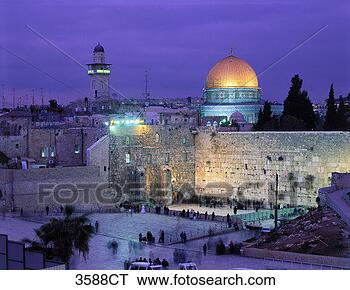
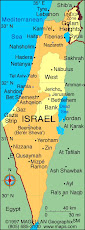
One of our basic Articles of Faith affirms: “We believe in the literal gathering of Israel and in the restoration of the Ten Tribes.” In 1841, LDS Apostle Orson Hyde offered a prayer on the Mount of Olives dedicating the Land of Israel for the gathering of the Jews. Israel went on to receive at least 11 apostolic blessings before the establishment of the State of Israel in 1948. For more than five decades (1870s-1920s), the church seriously considered establishing a Mormon colony in Palestine. Today, Brigham Young University has a beautiful center on Mount Scopus with the best view of the Old City in Jerusalem.
In the United States, Mormon pioneers arrived in the Utah territory in 1847. The first Jews arrived two years later, in 1849. The first Jewish worship service was held in 1864 in Salt Lake City. Rosh Hashanah was celebrated in Temple Square (the city center) in 1865. Brigham Young donated his personal land for a Jewish cemetery in 1866. In 1903, church President Joseph F. Smith spoke at the ceremony for the laying of the cornerstone for the state’s first Orthodox synagogue, which was largely paid for by the church. The second and third Jewish governors in the country were elected in Idaho (1914) and Utah (1916), the two states with the highest percentage of Mormons. Salt Lake City had a Jewish mayor by 1932, more than four decades before New York City.
Most Mormons in this country are very pro-Israel, and Romney is no exception. He has a close, decades-long personal relationship with Israeli Prime Minister Benjamin Netanyahu, who looks likely to be elected to another term. If Romney is elected, Jews and Israelis can be assured that they will have a true friend in the White House.